
Understand realistic attack paths and limit their impact
Proofline Security helps organisations understand how attackers could move through systems, which assets are most exposed and where existing controls may fail under pressure.
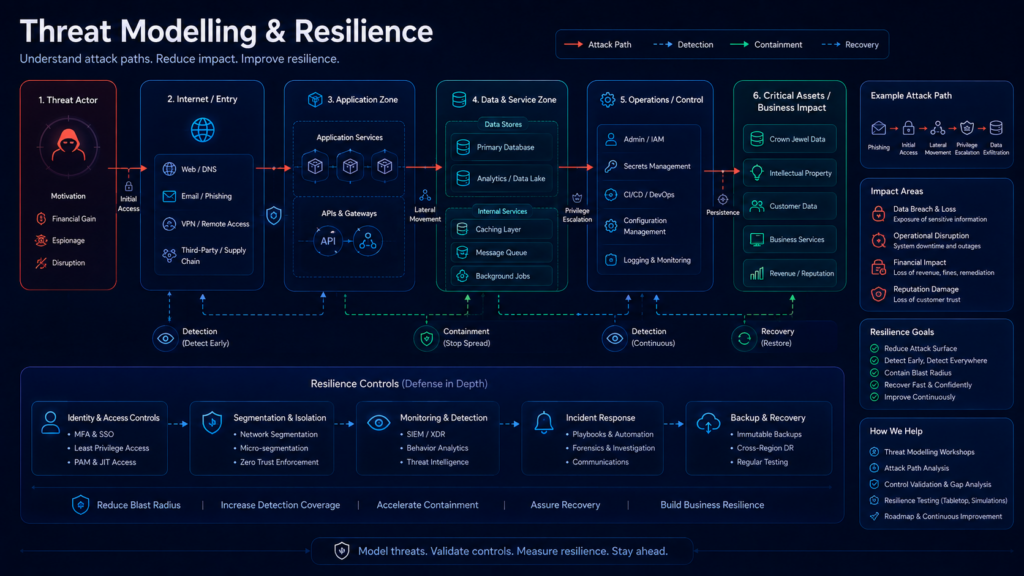
Threat modelling connects technical weaknesses to realistic scenarios. Rather than looking at findings in isolation, we examine how trust, connectivity, identity and architecture combine to create attack paths and increase potential impact.
What we assess
- critical assets and trust relationships
- realistic attacker goals and capabilities
- attack paths across applications, services and networks
- abuse cases and misuse scenarios
- lateral movement and privilege escalation
- detection and containment opportunities
- blast radius and business impact
- recovery dependencies and resilience
When to consider a review
- before major architectural changes or migrations
- when systems have complex trust relationships
- after significant vulnerabilities or incidents
- when teams need to understand worst-case impact
- before onboarding security-sensitive customers
- when resilience and containment have not been tested
Security in context
Threat modelling builds on the existing application and architecture context. Where needed, it can be combined with code review, application and network assessment or architecture review to validate important assumptions.